Most operators running a curated retail or product business know, in a general sense, what's selling and what isn't. Ask them directly and they'll have an instinct — this line does well, that shade doesn't move. The instinct is usually right in direction and wrong in magnitude, because almost nobody has actually connected the data that would tell them for certain.
Before I could run a real SKU-level review of what was earning its shelf space, I had to build the thing that let me see it. That turned out to be the harder and more useful part.
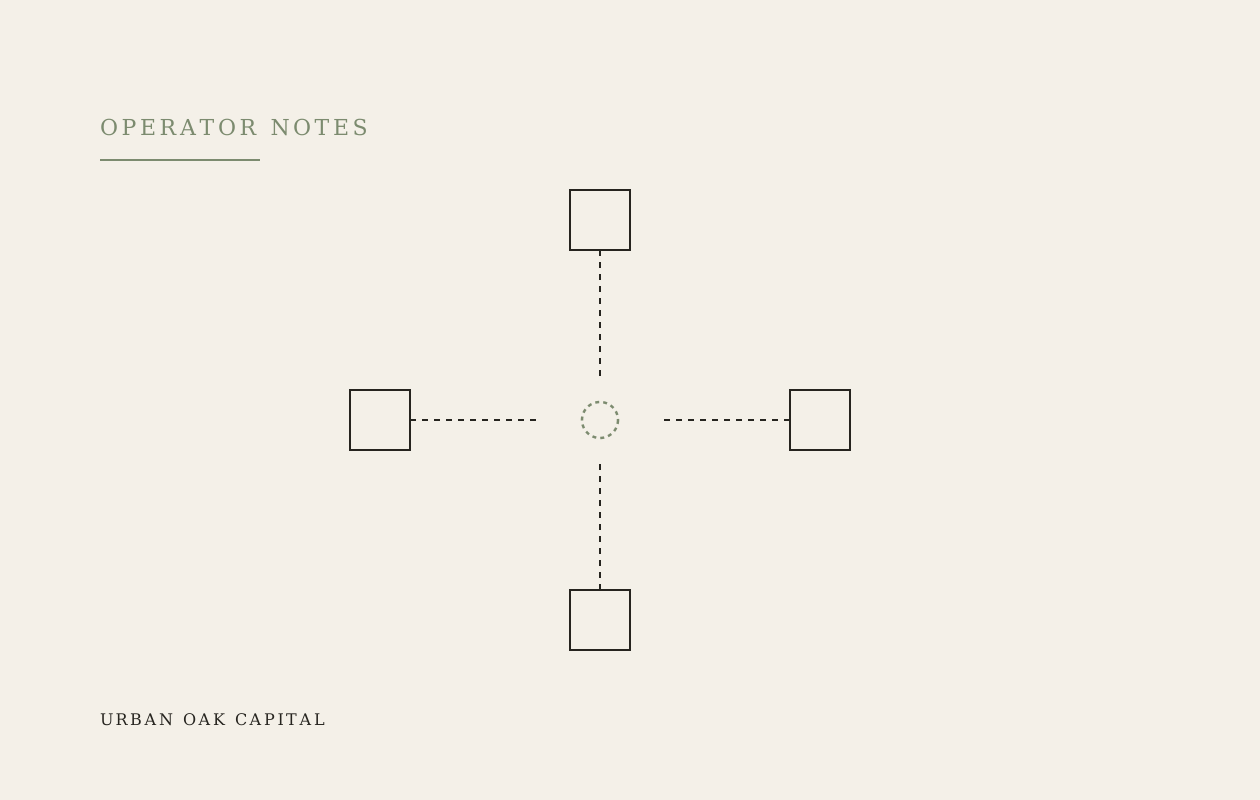
Four things, and most small operators have at most two of them talking to each other. Point-of-sale data — actual units sold per SKU, not rolled up to category, which is how most POS reporting defaults and how the pattern hides. Inventory on hand, by SKU, ideally with a cost basis attached. Purchasing history — not what was ordered, but what was actually received and stocked, since the two drift apart more than anyone expects. And sell-through: units sold against units available, over a defined window, not a lifetime total that flatters everything.
Any one of these alone tells you something. Interpreted individually they tell you nothing useful, because the real signal is in the relationship between them — a SKU that sold ten units looks fine until you see forty were bought.
The honest reason most small operators don't have this connected isn't a lack of will. It's that the tools don't talk to each other by default. POS systems are built for transactions, not analysis. Purchasing often happens somewhere else entirely — email threads, vendor portals, a rep's order form — disconnected from whatever inventory system is nominally tracking stock. Reconciling what was actually received against what was ordered is manual work that's easy to defer indefinitely, especially across a dozen brands and hundreds of SKUs.
None of this requires new software, necessarily. It requires deciding that the reconciliation is going to happen on a cadence, and then actually doing it — usually starting as a spreadsheet, because a spreadsheet you actually update beats a system you don't.
Not with all of it at once. Pick your largest brand or category by revenue, and build the connected view for that one line first: SKU-level sales, current inventory, and a real sell-through number over the trailing twelve months. That's enough to see whether the pattern is there before you commit the time to doing it everywhere.
If that data exists somewhere in your business but has never been connected, you're not wrong about what's selling — you just don't know by how much. That's worth a conversation.
— Sach